

The Fourth Man
Obliged to live in three men's homes,
she watched and learned
and chose her fourth man carefully.
The first, a towering, thin-lipped bully,
film star-handsome, pale-eyed, blond,
vainly bought her white fur coats,
velvet dresses, dainty shoes,
between rages, called her 'Dorothy',
because it means 'a gift from God'
and taught her vigilance till, fleeing the accusing
bruises on his turned-worm wife
and taking all their money,
he rid his thoughtful infant daughter of himself for good.
She washed up in a shoreside terraced
cottage, sheltered from the storms,
fostered by a Cornishman, uneducated, church-mouse poor,
whose black eyes twinkled with the wisdom of the good.
He called her 'My Cockles', took her fishing.
Dipping in his seas and rivers rinsing herself of dread,
she began to plan her kind of man, aged seven.
She was rescued from this haven by her mother,
newly mismarried to a blear-eyed drunk,
an alcoholic unconfessed,
whose cure proved very temporary.
He called her 'M'Wench'.
His charm when sober was perhaps
some compensation for
the vomit and the violence,
the limiting and pitiless, enduring penury.
She waited till full grown.
Her fourth home is a silky place
of rapture, interest, tenderness.
She shares it with a grey-eyed man
who makes her laugh, who feeds the birds,
who looks up from his book at her and calls her wife.
Dorothy Pope
A Poem For August

Cool Morning
Mid August, even so, a faint hint, gift
of autumn momentarily - a sweet,
soft breeze. With slender branches trees entreat
a sift of foliage. Their fingers lift.
Then half a dozen paper leaves adrift
blow in and dance round summer sandalled feet,
though brief, their restlessness another fleeting
sign of imminent and massive shift.
The season’s on the very cusp. We’ll see
the great sun climb and midday will be hot
but morning now, as evening later, spares
relentless sultriness, humidity
with temperate caress. Long shadowed autumn’s
in the wings. The old earth cools, prepares.
Dorothy Pope
Results of June 2026 Poetry Competition
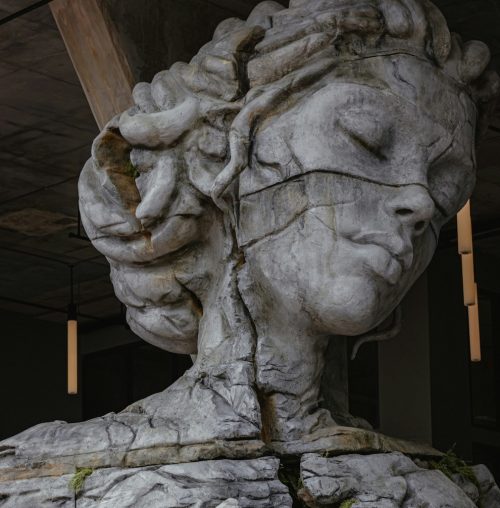
The judge of our quarterly poetry competition is Dorothy Pope, the Society’s Poet in Residence, who also sets the theme for each competition.
Judge’s Report on the June 2026 Poetry Competition themed ‘Statue(s)’
The theme of Statue(s) was variously interpreted as a snowman, a man keeping perfectly still or children doing so in the game of statues, stone, clay and wooden statues, statues hated, destroyed, cherished, prayed to, and Ozymandias which featured twice.
A disappointing entry in terms of quality this time. There were just two which were clearly better than the rest. Praise therefore goes to ‘Passer’ by Terry Jones and ‘Company’ by Sebastian Marziano.
In ‘Passer’, ‘Statue’ is interpreted as self standing still so as not to disturb a house sparrow (Passer domesticus) while it drinks and bathes at his birdbath. I question the American spelling of ‘grey’. Also, the slang phrase “come clean” jars with me and diminishes the poem’s grandeur. I liked “baptismal”, especially as it was preceded by “ritual” and “prayerful”. The poem finds an echo in every reader’s experience, I imagine.
‘Company’ by Sebastian Marziano would have been an English sonnet had line 6 not lacked an iamb. Why? I particularly liked lines 3 and 11 and 12. I saw the snowman, rebuilt annually, not just as a companion but also proof of man’s repeated trying again after setbacks.
Please note that because of the sheer volume of work, I am unable to provide feedback other than on the two winners.
Dorothy Pope
***************
Passer winner
That sparrow who visits the bird-bath —
however irregular his intervals,
his methods have a ritual consistency:
a prayerful bow into the stone bowl,
replenished more by us than by the rain;
watch his quick swigs and the baptismal finish;
he is, between sips, his own security
detail, eyes everywhere, till with no tell
he is gone, flicked away; but let me
come clean. It may not be the same bird
each time, but his doppelgangers
who fail to spot me, as I pause myself,
assume a gesture of permanence, hold it
in a stone figure, lined, weathered and gray.
Terry Jones
*************
Company runner-up
I built him from the weather I was in,
I rolled the heavy cold that wouldn't melt,
and pressed the whole white silence into skin,
a man the size of everything I'd felt.
I wound my own scarf twice around his throat
and turned him to the window square,
then buttoned him inside my outgrown coat
and went back in to lamplight, fire, and chair.
It wasn't spring that took him in the end.
The mild days came. The hard ground gave. He sagged
and all I'd built to stand for me now thinned
to sodden wool, spent coal, a heap of rag.
And still, each year, the cold comes back around,
my hands begin to build him from the ground.
Sebastian Marziano
*********************
The next poetry competition will be announced here and on the Society's social media platforms on 1 September 2026.
Photo: Marianna Smiley
Results of March 2026 Poetry Competition
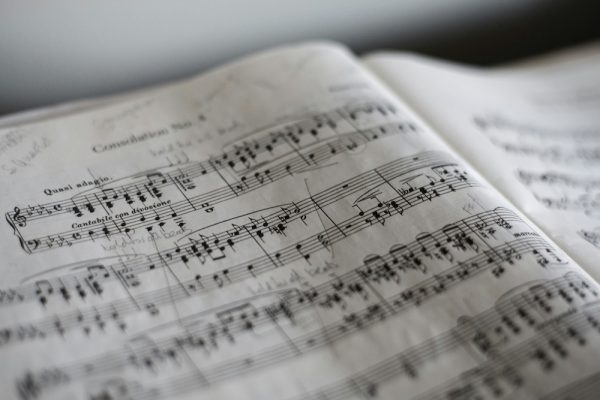
The judge of our quarterly poetry competition is Dorothy Pope, the Society’s Poet in Residence, who also sets the theme for each competition.
Judge’s Report on the March 2026 Poetry Competition themed ‘Music’
Poems on the theme of ‘Music’ featured dawn, orchestras, composing, church music, and church music after bombing, all in either free verse or as sonnets. Both first and second prize winners wrote about dawn though with different attitudes to the coming of the new day.
The winner is Gwyneth Box with her wonderful free verse poem ‘4 am: overture’. We hear with her the fidgeting, squeaking, crooning: tiny sounds of birds and animals as they stir. I particularly admired ‘a cockerel coughs his cliched script’. The verbs are a delight. ‘In the wings’ is clever, the title perfect. The poem’s ending of ‘A new day eases slowly into action’ serves to imagine the poet slowly easing herself out of sleep.
The runner-up is John Keane with his sonnet ‘Strange Notes’. This too is about the arrival of a new day but the poet sees it as unwelcome, an invader of sleep and dreaming, as ‘time lifts its iron head’ and the day’s demands. The final line is reminiscent of Keats’s conclusion to ‘Ode to a Nightingale’: ‘Fled is that music’.
Both poems were a joy to encounter.
Please note that because of the sheer volume of work, I am unable to provide feedback other than on the two winners.
Dorothy Pope
***************
The Winner
4 am: overture
Small birds fidget in the dark.
They squeak and whirr, then
birdsong swells and weaves
around the house in waves
of sibilance to spin a spell
that teases out the softening grey.
In the wings, a cockerel
coughs his clichéd script;
the neighbour’s cat croons
throatily and a distant dog
worries his concerns. The stage
is set. A new day eases slowly
into action.
Gwyneth Box
***************
The Runner-Up
Strange Notes
And music rolled like breakers to the shore
untarnished as a flake of minted snow:
more lucent than a darting spring in flow,
a flight of shining notes beyond all flaw.
Ere ray of morning light proclaimed the day
that fugue invoked a world of ecstasy,
supernal in its boundless mystery:
a place where time and trouble held no sway.
A motor turns, invading walls of calm
with urgent coughs. Time lifts its iron head.
The notes fall strange, and lose their elfin charm.
A sleepless chip brings pixels to a screen:
a message pings, demanding to be read.
And gone for good the music of a dream.
John Keane
***************
Photo: Marius Masalar
CHARIS SYKESUD
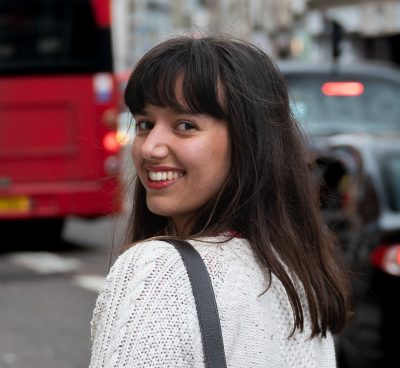
Charis Sykesud is a London-based musician, whose number one love is playing the violin. As a freelance, she performs both orchestrally and in chamber ensembles.
When she’s not playing the violin, Charis is often found writing programme notes or on a tennis court. She enjoys learning languages and reading, particularly early 20th Century fiction.
Charis is known amongst her friends as something of a pedant for well-spoken and written English.
Joseph Francis
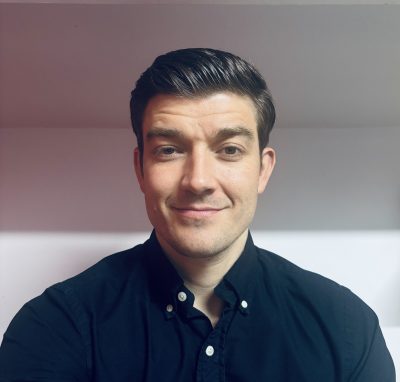
I grew up in Lincoln and served for four years in the Grenadier Guards, participating in royal ceremonial occasions such as Trooping the Colour in 2007. Following my military service, I worked for several London-based charities, where I developed expertise in community support, public service, and organisational management.
After completing my charitable work in London, I returned to Lincoln to pursue a career in engineering. I am currently in my final year of an English and Spanish degree at The Open University and have served on the Board of Education for Linguistics and Languages as a student representative. In addition to my studies, I hold a TEFL qualification and have taught English as a freelancer and through charitable organisations, supporting learners from diverse backgrounds.
Beyond my professional and academic pursuits, I am a dedicated bibliophile who values libraries and strongly advocates for universal access to education and knowledge.
Ray Ward
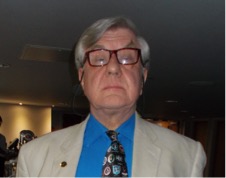
Ray Ward was born in Sheffield in 1947 and is retired after a career in libraries of many kinds in Sheffield, London, South Wales, Bristol, Leeds, Hastings, Brighton and, briefly, Saudi Arabia.
He is a Chartered Librarian and has a BA (Hons.) in Politics from the University of Hull. The English language is one of his main interests and he has been a member of the Society since 1989. He has been on the Committee since 2004.
His many other interests include space flight, astronomy, aviation, politics and quizzes. He has twice been on Mastermind and his subjects reflect his broad interests: Manned Space Flight in 1978 (though there had been a lot less of it then!), and The Life and Times of Anne Frank in 2006. He was on University Challenge (his team were finalists), and was the BBC Radio 4 Brain of Britain 2012.
Susan McKenna

Susan McKenna has a background in teaching English and French, sales, marketing, business development and management. She was Sales & Marketing Director with prestigious companies supplying consumer goods to retail in the UK and abroad from 2001 to 2016, then owner of her own consulting company.
Language has always been of paramount importance and delectation to her, both personally and professionally, not only in its rigour but also in its flexibility and infinite variety.
Susan describes herself as "a purist-iconoclast".
Peter Tompkins
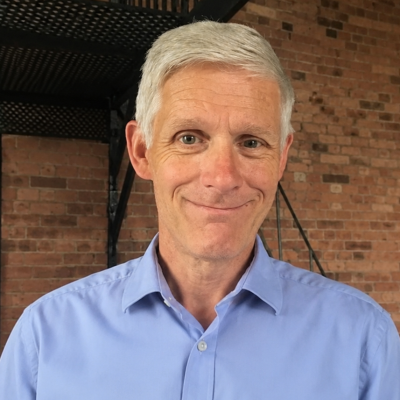
Peter Tompkins was born in Liverpool in 1959 but has lived in the South-East since 1982, these days splitting his time between London and Cambridge and occasional trips to the Lake District.
Peter is a consulting actuary with Callund Consulting and spends his time consulting to overseas governments and international agencies on pension plans and their reform. Prior to that, he was a partner at PricewaterhouseCoopers and before that a partner at Lane Clark & Peacock.
His other interests include beekeeping, sundials, chamber music, rowing and hill walking. He is a trustee of the City Music Foundation and of the New Music Players and he is a Court Member of two liveries, the Wax Chandlers (of which he is a Past Master) and the Actuaries.